Short answer: a space heater will not pull water out of the air, but it warms the cold surfaces where water vapor condenses — which is the part that actually rots window frames and feeds mold. The R.W.FLAME is a 1500 W ceramic PTC unit for one room of roughly 200 sq. ft. ZeroHumi score: 4.3/5 as a targeted anti-condensation tool.
You know the room. Maybe it is the bathroom where the mirror never fully clears. Maybe it is the basement corner where boxes have started smelling faintly of mildew. Maybe it is the bedroom with the window that fogs up every single night, no matter what you do.
Here is the thing nobody tells you: that room is not cursed. It is cold. And cold, combined with humidity, is the exact recipe mold has been waiting for.
The fix most people reach for first is a dehumidifier — and it is a good instinct. But there is a cheaper, faster, more surgical tool almost nobody thinks of: a space heater aimed at that one damp, stubborn room. That is exactly the gap the R.W.FLAME ceramic space heater fills.
Already past prevention and staring at actual mold? Skip ahead to our mold removal guide. This one is about stopping the problem before it starts.
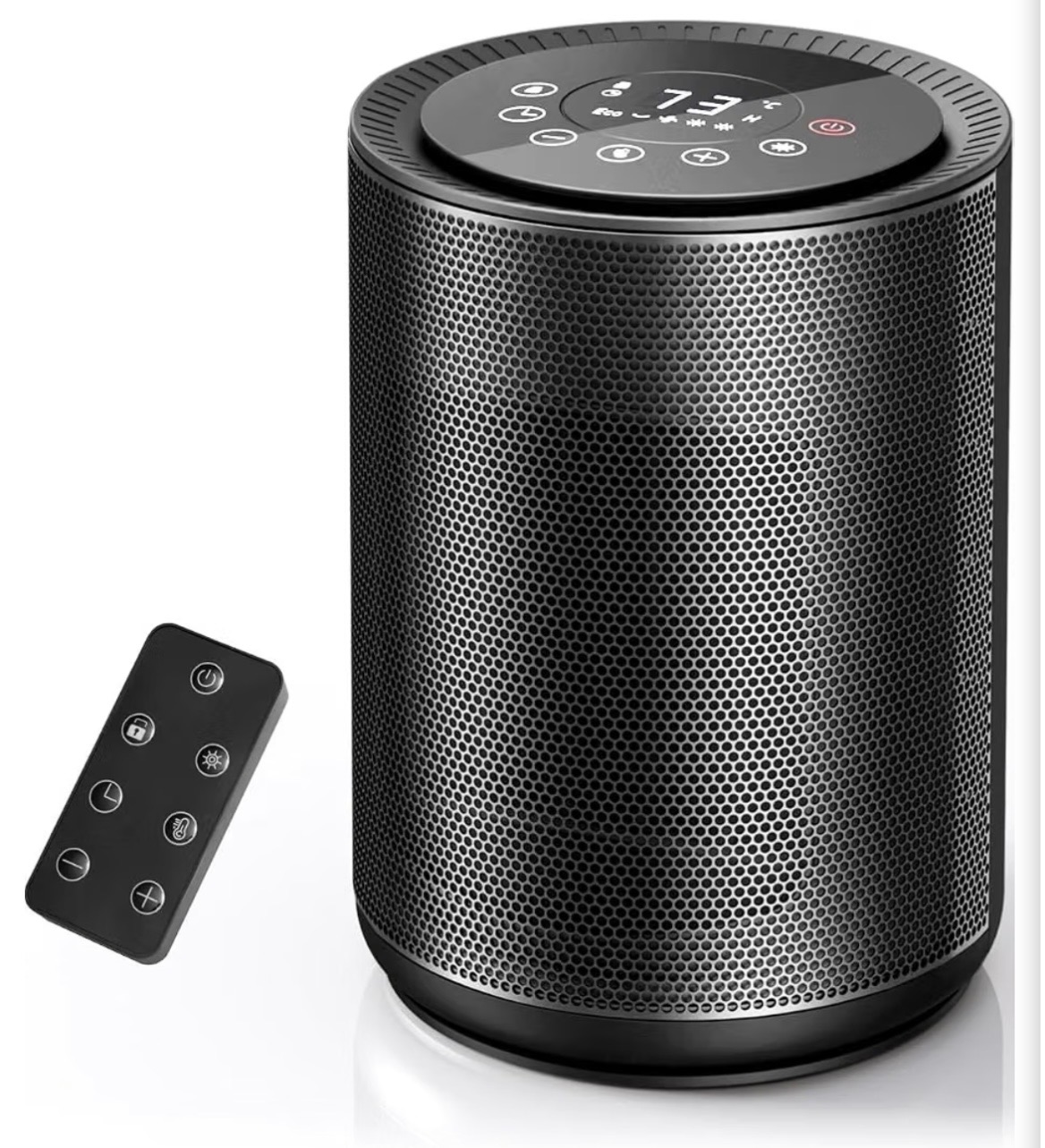
R.W.FLAME Ceramic Space Heater — 1500 W, ~200 sq. ft.
2-second heat-up, ±1°F thermostat, 4 modes, ~35 dB, 24-hour timer, remote, tip-over shut-off and child lock.
Check current price on AmazonAs an Amazon Associate, ZeroHumi earns from qualifying purchases.
Does a space heater actually dehumidify a room?
This is one of the most searched questions out there, and the honest answer is: not directly — but almost as effectively.
A space heater does not physically pull water molecules out of the air the way a dehumidifier does. What it does instead is close the temperature gap between the air and the cold surfaces around it — windows, exterior walls, basement floors. That gap is the entire reason condensation happens. Warm a cold wall up, and water vapor stops turning into liquid droplets on it. No droplets, no standing moisture, no mold buffet.
So if you have ever wondered "will a space heater dehumidify a room?" — it will not remove moisture, but it will very often stop the visible, dangerous symptom of moisture in its tracks. For a lot of rooms, that is the whole battle. For genuinely wet air, pair it with one of our best dehumidifier picks.
Meet the R.W.FLAME ceramic space heater
This is a compact, cylindrical ceramic space heater built around PTC (positive temperature coefficient) technology — the same tech behind the fastest-heating units on the market. It is rated to reach full heat in about two seconds, versus the slow crawl of old-school oil-filled or coil heaters. At 1500 watts it covers roughly 200 square feet: a bedroom, a home office, a bathroom or a garage workspace, depending on where your damp problem lives.
2-second heat-up
Blast a bathroom the moment humidity spikes after a shower, instead of waiting five minutes while moisture settles into the grout.
±1°F thermostat
Hold a damp room a few degrees warmer around the clock — often the whole difference between a fogged window and a clear one.
~35 dB quiet
Quieter than a page turning, so it can run in a bedroom overnight without wrecking your sleep.
Tip-over + child lock
Shuts itself off the moment it is knocked over — a safer pick for homes with kids, pets or cluttered floors.
Key specs at a glance
- Heating element
- Ceramic PTC (convection heating)
- Power
- 1500 W, 115 V, electric
- Coverage
- About 200 sq. ft.
- Modes
- Low, High, Eco, Fan-only (4 total)
- Heat-up time
- Full heat in about 2 seconds
- Thermostat
- Adjustable in ±1°F increments, up to 104°F
- Noise level
- About 35 dB
- Timer
- 24-hour programmable auto shut-off
- Controls
- Touch panel + included remote
- Safety
- Flame-retardant housing, overheat protection, 45° tip-over shut-off, child lock, ETL certified
- Form factor
- Lightweight cylinder with carry handle
Why this beats a "regular" heater for fighting humidity
Not every heater makes a good heater for basement humidity or a safe space heater for bathroom use. The features that actually matter: instant heat-up so you can hit a bathroom the moment humidity spikes; ±1°F precision so you can hold a damp room just a few degrees warmer around the clock; an Eco mode so you are not heating the whole house to protect one vulnerable room; and a carry handle that turns it into a portable heater for condensation control — bathroom this morning, basement tonight.
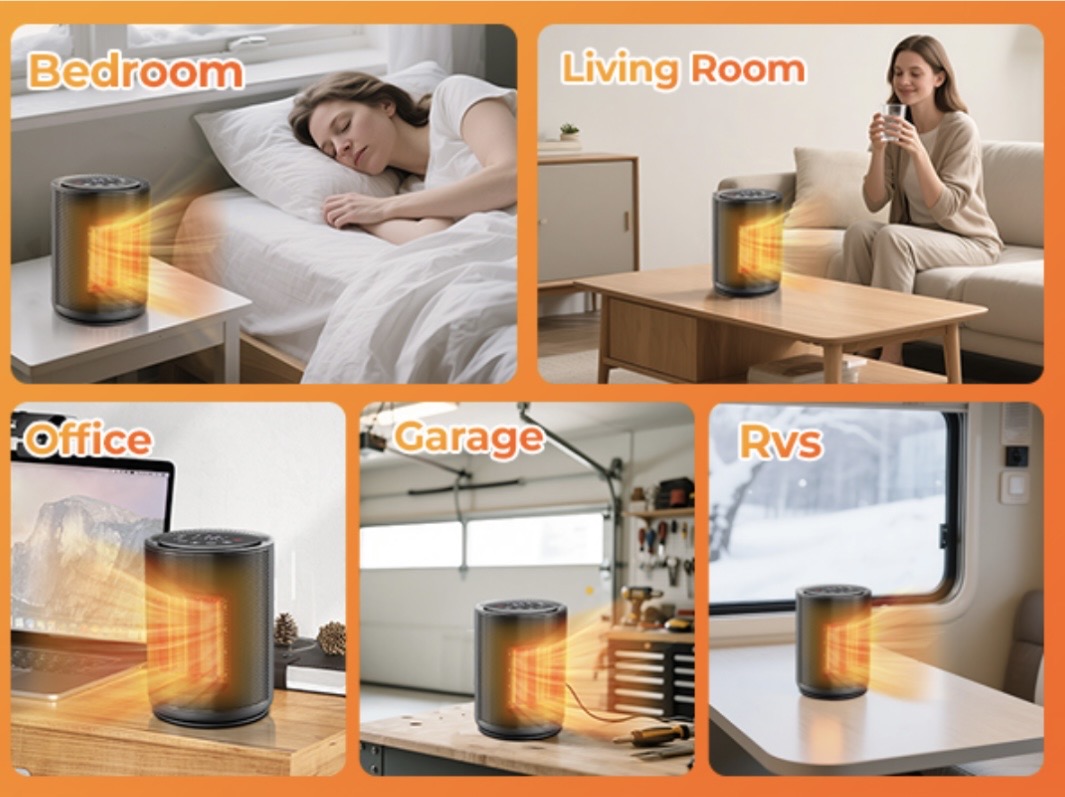
Where this heater earns its keep
| Room | Why it works there |
|---|---|
| Bathrooms | Short, targeted bursts post-shower to fight fogging and mildew-prone grout |
| Basements | A classic humidity hotspot central heat rarely reaches |
| Bedrooms | Especially north-facing or single-pane windows that fog nightly |
| Home offices & dorms | Hours of seated time that need targeted, quiet warmth |
| Garages & RVs | Occasional-use spaces where central heat is not practical |
For basements, remember that a heater treats the symptom. If water is actually getting in, start with our basement waterproofing picks.
Pros and cons
Pros
- • Near-instant heat-up — ideal for the "hit it fast" style of humidity control
- • Whisper-quiet (~35 dB) — safe for bedrooms without disrupting sleep
- • Four modes give real flexibility between comfort and energy savings
- • Remote control for bedside or couch use
- • Strong safety feature set for the price point
Cons
- • 200 sq. ft. coverage means it is a supplemental heater, not a whole-basement solution
- • Best in well-insulated or smaller rooms — drafty spaces need longer run times
- • Does not replace fixing the root cause (poor ventilation, insulation gaps)
Space heater vs dehumidifier: which one do you need?
A dehumidifier removes water from the air and is the right answer for chronically wet air, drying a flooded room or a whole damp basement. A heater closes the temperature gap and is the right answer for condensation on cold glass and cold walls. In a cold, damp room the two together are genuinely better than either alone — the heater keeps surfaces above dew point while the dehumidifier lowers the dew point itself.
Frequently asked questions
Does a space heater actually reduce humidity in a room?
Not directly — it does not remove water vapor from the air like a dehumidifier does. But by warming cold surfaces, it stops water vapor from condensing on them, which is usually the visible, damage-causing part of a humidity problem.
Is a heater or a dehumidifier better for a damp wall?
They solve different problems. A dehumidifier physically removes moisture from the air; a heater closes the temperature gap that causes condensation on cold surfaces. For a genuinely wet wall or chronic damp, dehumidifiers do more of the heavy lifting — heaters are best for preventing condensation before it starts.
Can I use this heater safely in a bathroom?
Yes, treated as a supplemental, short-burst heater — check the water-exposure rating before placing it near a shower or sink, and always keep it on a dry, stable surface away from splash zones.
Is a 1500W ceramic heater enough for a basement?
It covers about 200 sq. ft., which handles a single room or corner — not an entire open basement. For larger or persistently damp basements, pair it with a dehumidifier.
How is a ceramic PTC heater different from an oil-filled heater?
Ceramic PTC heaters like this one reach full heat almost instantly (~2 seconds) and cool down quickly once switched off — ideal for short, targeted sessions. Oil-filled heaters warm up slower but hold heat longer after being turned off.
Is it safe to leave this heater running overnight?
The 24-hour timer, overheat protection and 45° tip-over shut-off are built for unattended use, but as with any space heater, keep it on a stable surface away from bedding, curtains or clutter.
Final verdict
If your winter humidity problem lives in one or two specific rooms — a bathroom mirror that never clears, a basement corner that smells faintly off, a bedroom window fogged solid by 9 pm — the R.W.FLAME ceramic heater is a fast, quiet, genuinely useful way to close the temperature gap that turns humidity into condensation, and condensation into mold. It is not a dehumidifier replacement and it will not fix bad ventilation on its own, but as a targeted first line of defense for cold, damp zones it earns its spot in the toolkit.
R.W.FLAME Ceramic Space Heater — 1500 W, ~200 sq. ft.
Check current price on AmazonAs an Amazon Associate, ZeroHumi earns from qualifying purchases.
Methodology: this review is based on manufacturer specifications, Amazon listing data and published independent testing of ceramic PTC heaters. We analyze and compare — we do not claim hands-on lab testing of this unit.
This article contains Amazon affiliate links. As an Amazon Associate, ZeroHumi earns from qualifying purchases at no extra cost to you.