Does Salt Absorb Humidity?
Short answer: Yes, but very little. Table salt (sodium chloride) does have hygroscopic properties, but its effectiveness is too limited to treat a real humidity problem. Explanations.
Yes, salt absorbs humidity... but 600x less than an absorber
Table salt (NaCl) is hygroscopic: it attracts water molecules. This is why your salt clumps in the salt shaker. However, it only absorbs0.5% of its weight in water, compared to 300% for the calcium chloride in absorbers. To absorb 1 liter of water, you would need 200 kg of salt!
Scientific Comparison of Hygroscopic Substances
| Substance | Absorption | Saturation | Toxicity | Cost |
|---|---|---|---|---|
| Table salt (NaCl) | 0.5% of weight | A few hours | Low | 1€/kg |
| Calcium chloride (CaCl2) | 300% of weight | 4-8 weeks | Moderate | 8€/kg |
| Silica gel | 40% of weight | 2-4 weeks | None | 15€/kg |
| Lithium chloride | 400% of weight | 6-10 weeks | High | 50€/kg |
Source: CNRS, INRS
True or False? The Dehumidifying Salt Myths
Salt in a bowl dehumidifies a room
FALSE: capacity too low, negligible effect on a room
Coarse salt is more effective than fine salt
FALSE: same chemical composition, same capacity
Sea salt absorbs better
FALSE: NaCl remains NaCl, regardless of origin
Dried salt can be reused
TRUE: but very reduced capacity after saturation
Why Salt Is Not an Effective Solution
Contrary to what some "grandmother's tips" suggest, table salt cannot effectively dehumidify a room. Here is why:
Low absorption capacity
Salt absorbs about 0.5% of its weight in water. To absorb 1 liter of water, it would take 200 kg of salt! Chemical absorbers (calcium chloride) absorb up to 3 times their weight.
Rapid saturation effect
Salt saturates quickly and stops absorbing humidity. Once wet, it can no longer capture new water molecules and becomes useless.
Corrosive to materials
Dissolved salt can damage metal surfaces, textiles, and certain materials. It can also leave white marks that are difficult to clean.
Salt vs Commercial Absorbers
| Criterion | Table salt | Chemical absorber |
|---|---|---|
| Absorption capacity | ~0.5% of weight | 200-300% of weight |
| Effectiveness duration | A few hours | 4-8 weeks |
| Area covered | Negligible | 10-20 m² |
| Cost | ~1 €/kg | ~5-10 €/refill |
What to Do Instead of Salt?
Chemical absorbers
For a simple and low-cost solution, opt for commercial humidity absorbers (calcium chloride). Effective for small spaces: closets, cellars, caravans.
Learn more →Electric dehumidifier
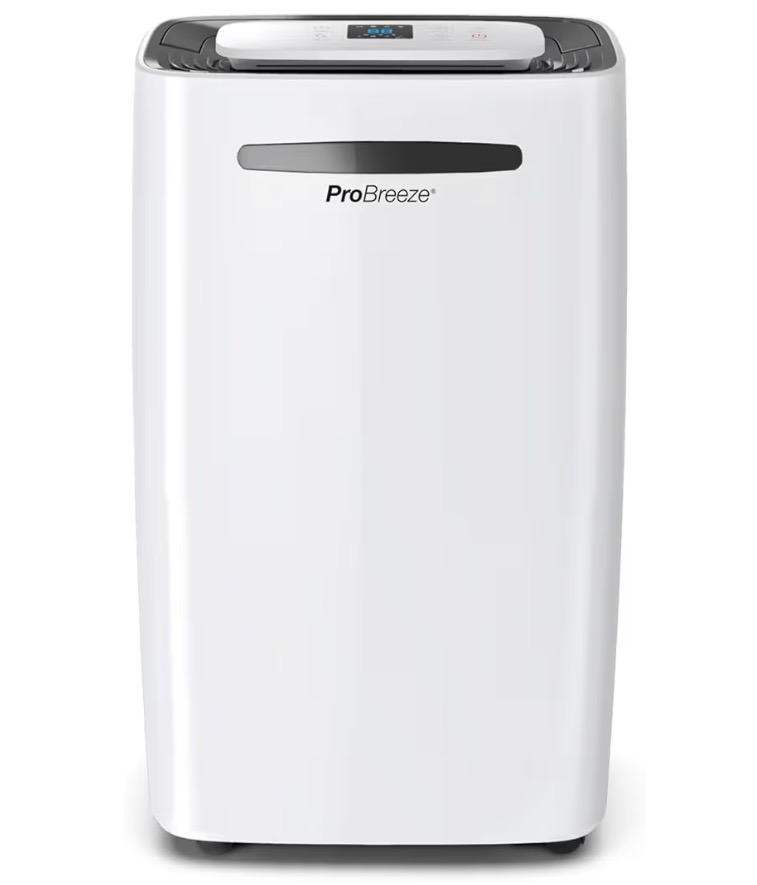
To treat an entire room, an electric dehumidifier is much more effective. It can extract 10 to 30 liters of water per day depending on the model.
Compare options →Improve ventilation
Often, the humidity problem comes from poor ventilation. Venting regularly or installing a VMC can solve the problem at the source.
Ventilation guide →Treat the cause
Infiltration, rising damp, condensation... Each cause of humidity requires a specific treatment. Identify the origin first.
Diagnose →In Summary
- Yes, salt absorbs humidity, but its capacity is very low
- Not recommended as a solution for dehumidifying a room
- Prefer chemical absorbers or a dehumidifier
- Treat the cause of the humidity, not just the symptoms
Sources and references
This article relies on official, verified sources to guarantee reliable information.
- [1]
- [2]
- [3]
- [4]Dehumidification myths and realities— UFC-Que Choisir
Dr. Claire Fontaine
Verified expertChemist and science communicator
Doctor in materials chemistry