Which electric heater to choose in 2026? The complete guide
Quick answer. The right heater depends on the room and usage: inertia for comfortable daily heating (living room, bedroom), oil-filled for silent backup, fan or ceramic for a bathroom or quick rise, smart to save up to 30%. Size based on approximately 100 W per m².
With electricity bills rising by +43% between 2020 and 2025 (INSEE), choosing the right heater is no longer just a question of comfort: it's a real lever for savings. And a well-heated home also means fewer cold walls, hence less condensation and mold.
Technologies explained
- Fan / ceramic: heats air instantly via resistance and a fan. Fast and cheap, but energy-intensive and noisy — reserved for backup and bathrooms.
- Oil-filled: a resistance heats a heat-transfer liquid that diffuses gentle heat through radiation, without drying the air and in silence. Mobile on wheels, ideal as a backup.
- Dry inertia: a ceramic, cast iron, or stone core accumulates heat and releases it slowly, even when turned off. The king technology for daily use.
- Fluid inertia: heats up faster than a dry core, but releases heat for a slightly shorter time.
- Radiant panel: heats by radiation, reactive, good value for money for a room with intermittent use.
- Smart: any of these technologies, controlled by an app and programmable, to optimize consumption.
What power for which room?
The basic rule: about 100 W per m² for standard insulation (less if well-insulated, more for old buildings or high ceilings).
- Up to 10 m²: 1000 W
- 10 to 15 m²: 1000 – 1500 W
- 15 to 20 m²: 1500 – 2000 W
- Beyond 20 m²: 2000 W or multiple heaters
Our 5 recommendations by room and usage
1. Cecotec Ready Warm — The best budget smart heater 💰
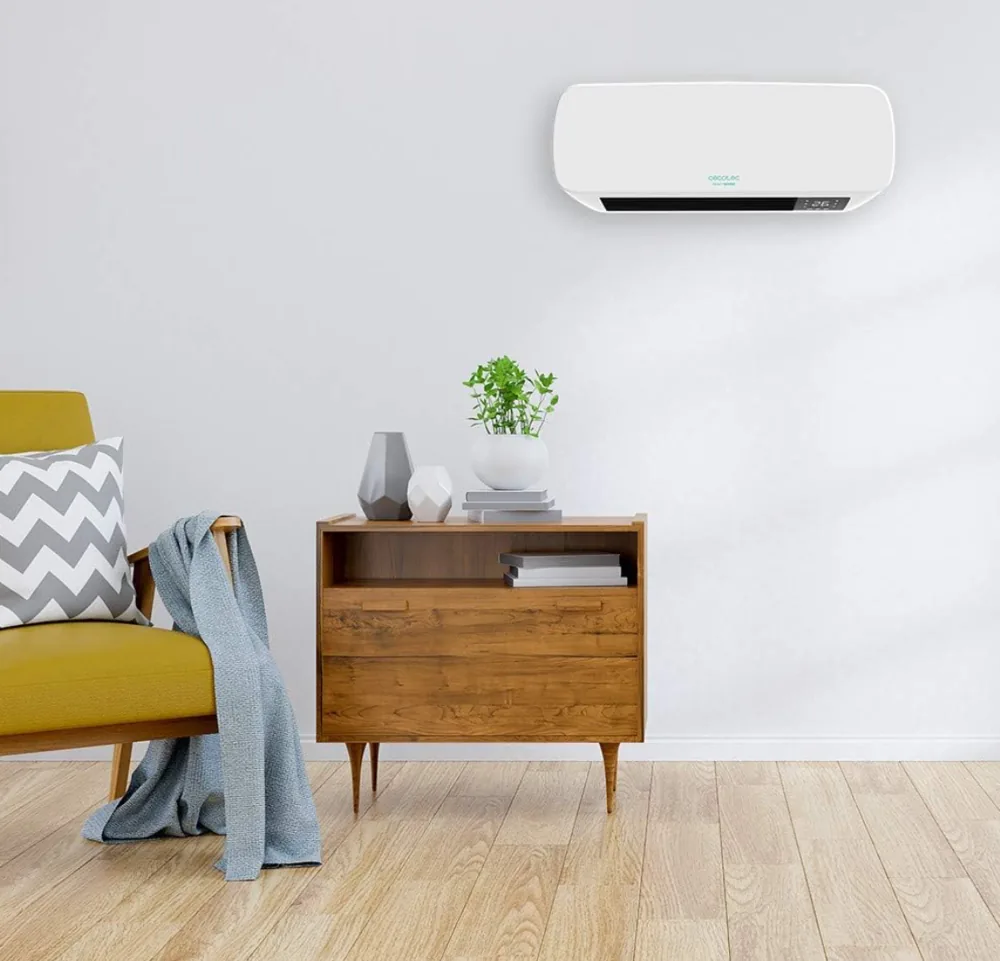
- Technology: Wall-mounted ceramic
- Ideal for: Bathroom, small spaces
- Smart: Yes + digital display
- Thermostat: Adjustable + timer
✅ Pros
- Very low price
- Wall mounting (space saving)
- Smart + digital screen
- Fast heating
❌ Cons
- −Power limited to small spaces
- −No thermal inertia
For whom? A bathroom, small office, or a cheap smart backup heater.
2. AIRMATE ceramic fan heater — The fast backup heater 💨
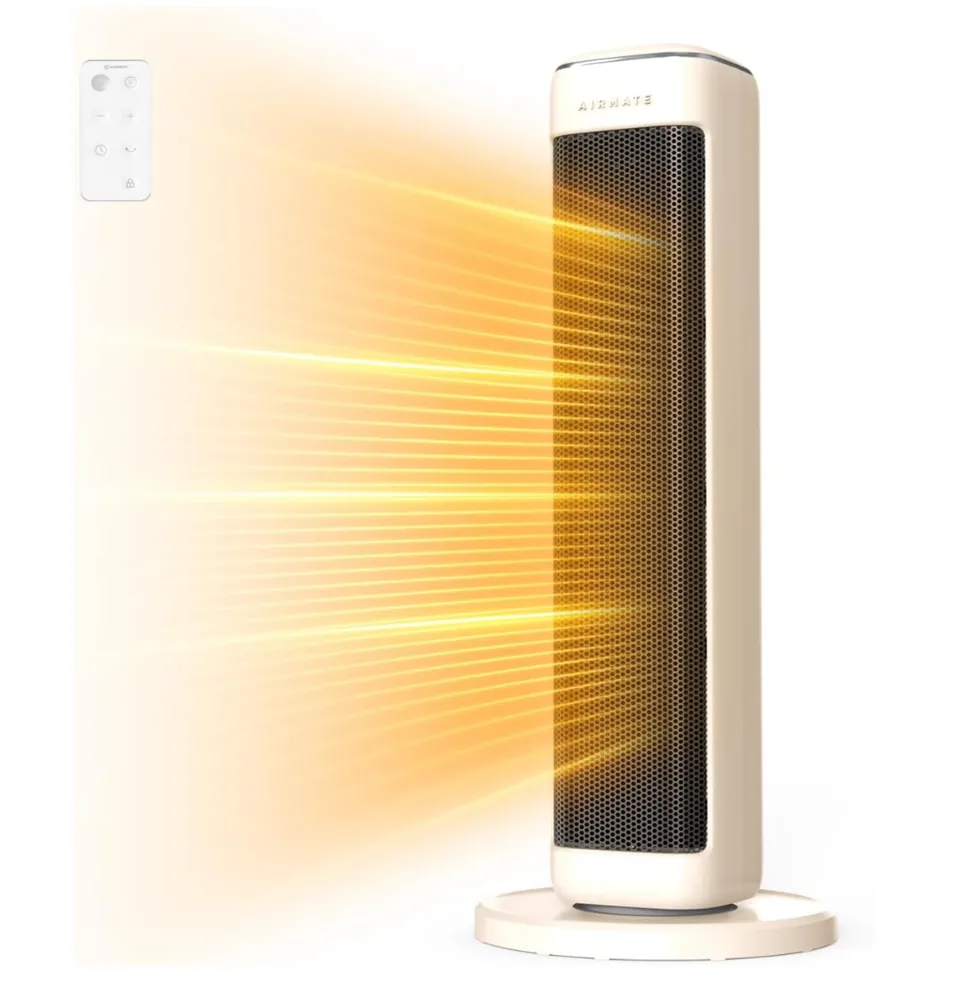
- Technology: Ceramic PTC fan
- Format: Tower with oscillation
- Remote control: Yes + timer
- Safety: Overheat / tip-over protection
✅ Pros
- Immediate temperature rise
- Oscillation for wide distribution
- Remote + thermostat
- Integrated safety features
❌ Cons
- −High energy consumption
- −Noisier, reserved for backup use
For whom? Quickly warming up a living room or office for occasional use.
3. De'Longhi Radia (oil-filled) — The reference oil-filled heater 🛢️
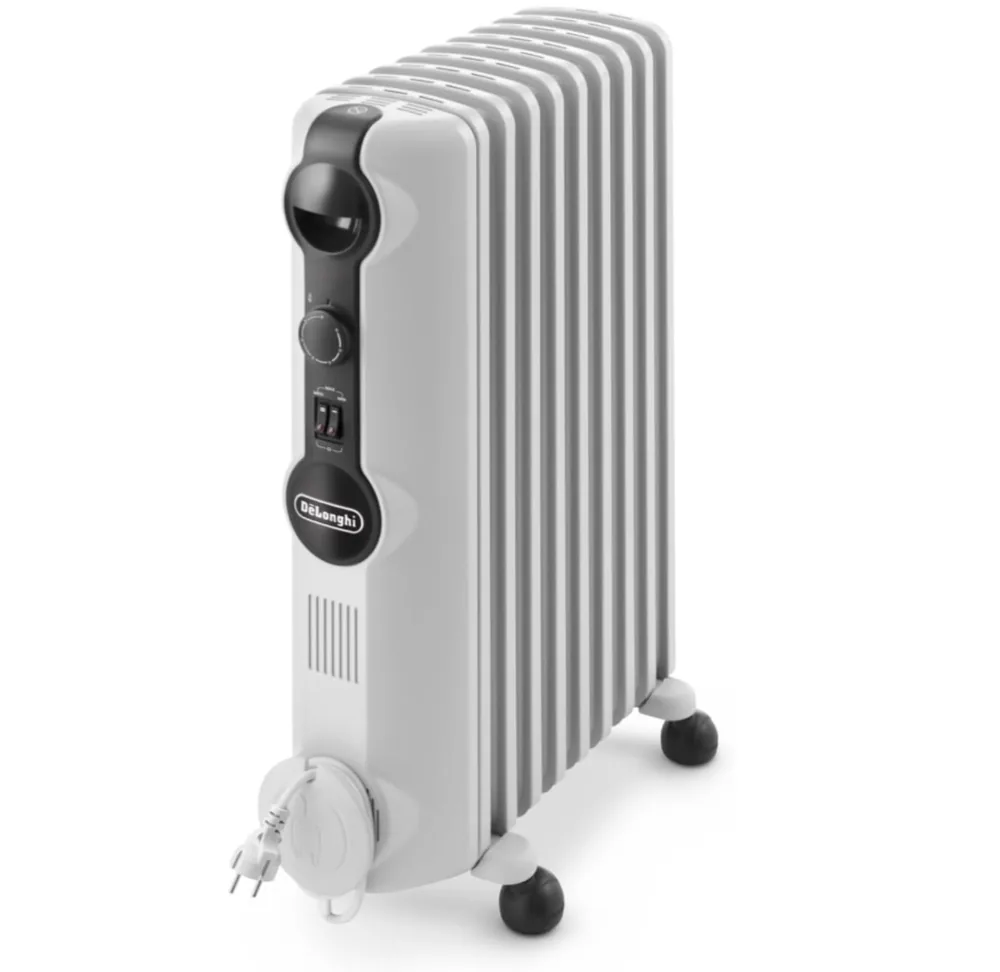
- Technology: Oil-filled — radiant
- Quietness: Absolute (no fan)
- Mobility: Wheels + cord wrapper
- Ideal for: Bedroom, office
✅ Pros
- Gentle heat without drying the air
- Absolute silence
- Mobile on wheels
- De'Longhi reliability
❌ Cons
- −Slower temperature rise
- −Heavy
For whom? A bedroom, home office, or guest room.
4. Thomson inertia panel — The reliable daily choice ⭐
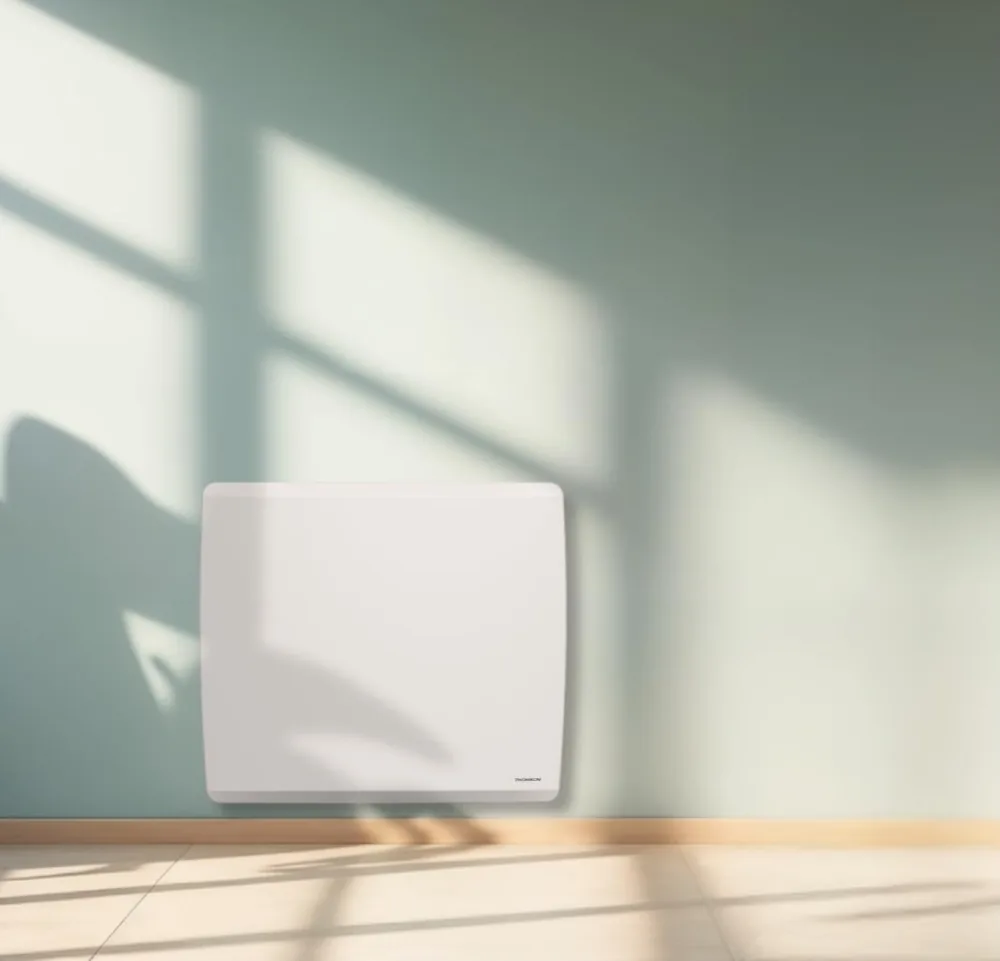
- Technology: Inertia / wall panel
- Heat type: Homogeneous and steady
- Thermostat: Interchangeable / programmable
- Ideal for: Daily heating
✅ Pros
- Consistent and long-lasting heat
- Inconspicuous wall design
- Upgradeable thermostat
- Good comfort/consumption balance
❌ Cons
- −Gradual warming
- −Wall installation required
For whom? Daily heating for a bedroom or medium-sized living area with a discreet look.
5. CIARRA ceramic inertia — The premium durable choice 🏆
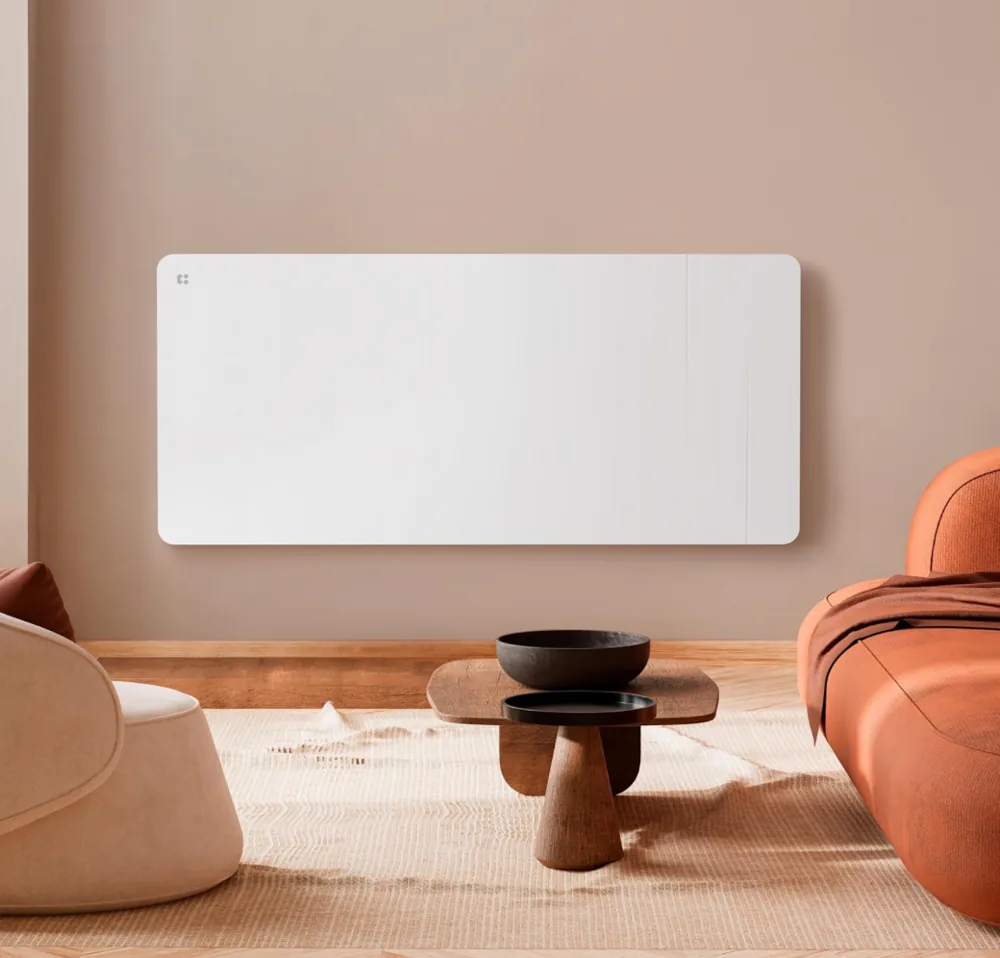
- Technology: Ceramic inertia
- Heat release: After shutdown
- Format: Large wall panel
- Ideal for: Main living area
✅ Pros
- Durable comfort, gentle heat
- Heat continues after powering off
- Sleek design, large panel
- Economical in use
❌ Cons
- −Most expensive
- −Slower rise than a fan heater
For whom? A living area (salon, stay) as primary heating, for uncompromising comfort.
👉 See the full comparison of electric heaters (price, technology, specifications)
How to pay less (for purchase and usage)
- Program and control. A smart heater with programming and occupancy detection allows for up to 30% savings compared to an old convector, especially when coupled with off-peak rates.
- Take advantage of aid. Replacing old convectors with high-performance inertia can qualify for CEE, MaPrimeRénov', and a 5.5% VAT rate when installed by a professional.
- Buy at the right time. Prices drop in March-April and during Black Friday, away from the winter peak.
Heater and humidity: the connection to know
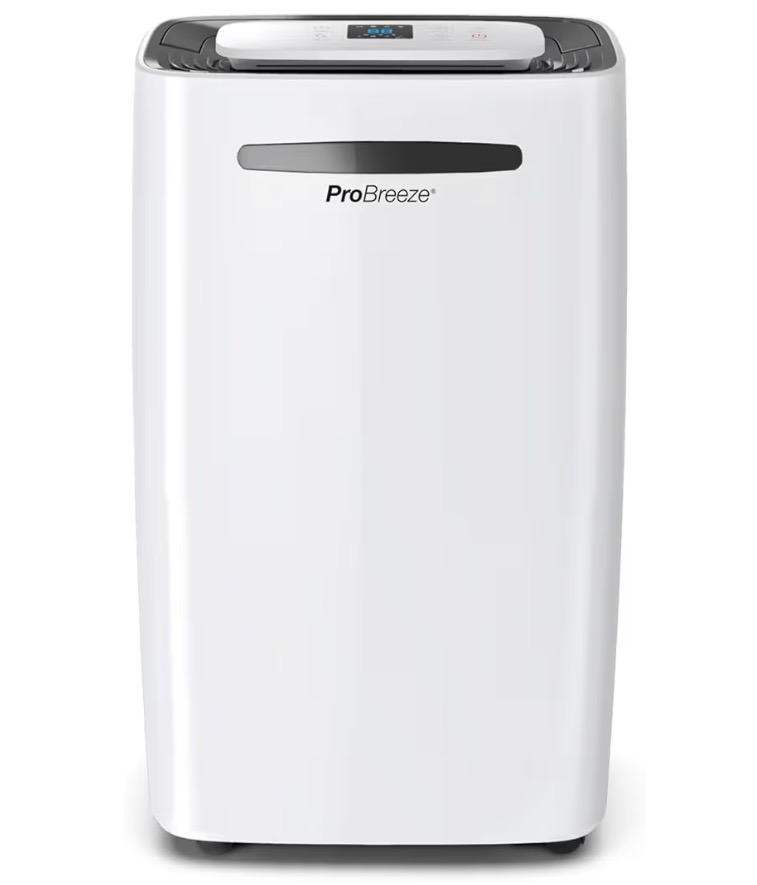
A poorly heated home results in cold walls on which humid air condenses — the primary cause of mold in poorly heated rooms. Maintaining a stable temperature significantly limits condensation. But heating alone is not enough: pair it with a hygrometer, good ventilation, and, if humidity persists, a dehumidifier.
Frequently Asked Questions
Which electric heater consumes the least?▾
For equal comfort, an inertia radiator consumes about 15% less than an old convector, and a programmed smart model allows for up to 30% savings. Fan heaters remain the most energy-intensive.
Oil-filled vs inertia: which to choose?▾
Oil-filled is ideal as a mobile backup (bedroom, office), silent and affordable. Fixed inertia is more profitable for permanent primary heating, with a better lifespan.
Which heater for a bathroom?▾
A ceramic or fan model with fast warming, with the appropriate protection rating (IP21/IP24). The wall-mounted smart Cecotec Ready Warm is well-suited for small bathrooms.
What heater power do I need for my room?▾
Approximately 100 W per m² with standard insulation: 1000 W for up to 10 m², 1500 W for up to 15 m², 2000 W beyond that.
Do electric heaters dry the air?▾
Fan heaters and convectors tend to dry the air, while oil-filled and inertia heaters diffuse radiant heat that better preserves ambient humidity.
In summary
Choosing an electric heater means matching technology to the room: ceramic/fan for the bathroom and backup, oil-filled for a silent bedroom, inertia for daily comfort, smart to manage the bill. From the 45 € Cecotec to the CIARRA inertia, there is a model for every need — and heating well also means keeping humidity and mold at bay.