Water leak detector: which one to choose to avoid water damage?
Quick answer. The best choice for most homes is a connected detector that alerts you on your smartphone, like the X-Sense SWS54 kit (~€60) to cover the whole house. For a smaller budget, the Geevon set (~€15, 100 dB) protects two water points. And to shut off the water even while away, a motorized valve (from ~€42) paired with a sensor is the only true defense.
Water damage costs an average of €1,800 — and 500,000 to 1 million occur per year in France. The worst part? It almost always starts with an invisible detail: a worn seal, a micro-cracked washing machine hose, a leaking connection. For weeks, water seeps, walls swell, and mold sets in. A detector costing a few euros transforms this silent nightmare into a simple alert.
Why a leak is much more dangerous than one might think
A leak never stops by itself. Unlike a spectacular flood, most water damage is slow and invisible: water accumulates under furniture, behind an appliance, in a floor slab. By the time it is noticed, the parquet has swollen, the drywall is soaked, and mold — harmful to health — has colonized the walls. The real danger is not the puddle: it is the time lost before acting. A detector is that safety net that buys you that time.
Which detector for your situation?
| Your situation | The appropriate solution |
|---|---|
| Small budget, often at home | Geevon set of 2 (audible alarm) |
| Home already automated | Aqara (Zigbee) |
| Remote alert | Meross (connected) |
| Several water points to cover | X-Sense SWS54 Kit ⭐ |
| Long absences, secondary residence | Creechwa Valve (shuts off water) |
Our 5 recommendations by profile
1. Geevon (set of 2) — The smart choice at €15 🔔
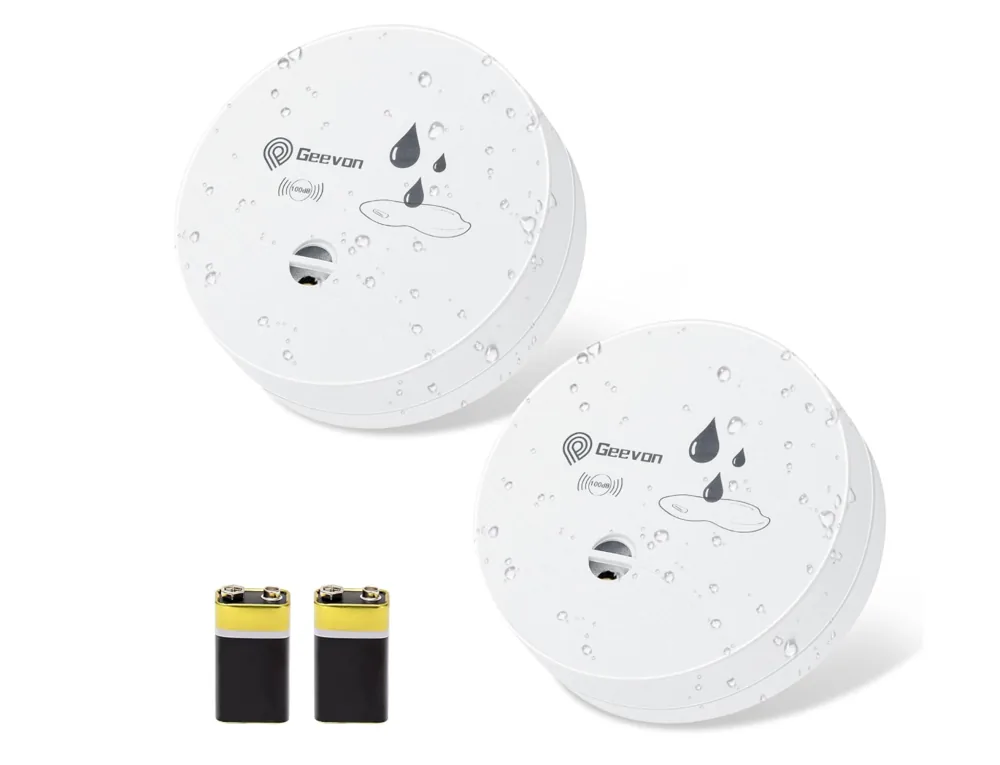
- Type: Local audible alarm
- Alarm: 100 dB
- Set: 2 sensors + batteries
- Connected: No
✅ Strengths
- Budget price (set of 2)
- Installation in 1 minute
- Powerful 100 dB alarm
- Batteries included
❌ Weaknesses
- −No remote notification
- −Local alarm only
For whom? Protect two water points at a low price when you are at home.
2. Aqara (Zigbee) — For the connected home 🏠
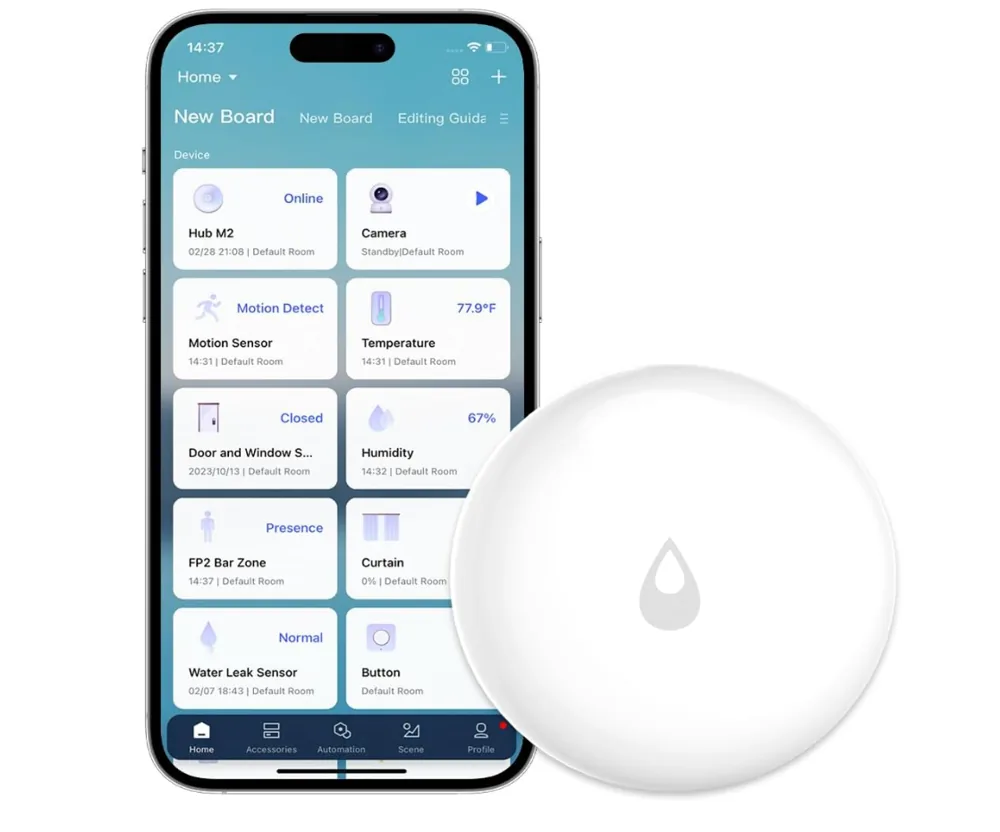
- Type: Zigbee sensor (hub required)
- Compat.: HomeKit / Alexa / Google
- Waterproof: IP67
- Battery life: 2 years
✅ Strengths
- Compatible with HomeKit / Alexa / Google
- Powerful automations
- IP67 waterproof
- Ultra-compact format
❌ Weaknesses
- −Aqara hub required
For whom? Already equipped with smart home systems, to link detection and automatic actions.
3. Meross (connected) — Alerts anywhere, anytime 📱
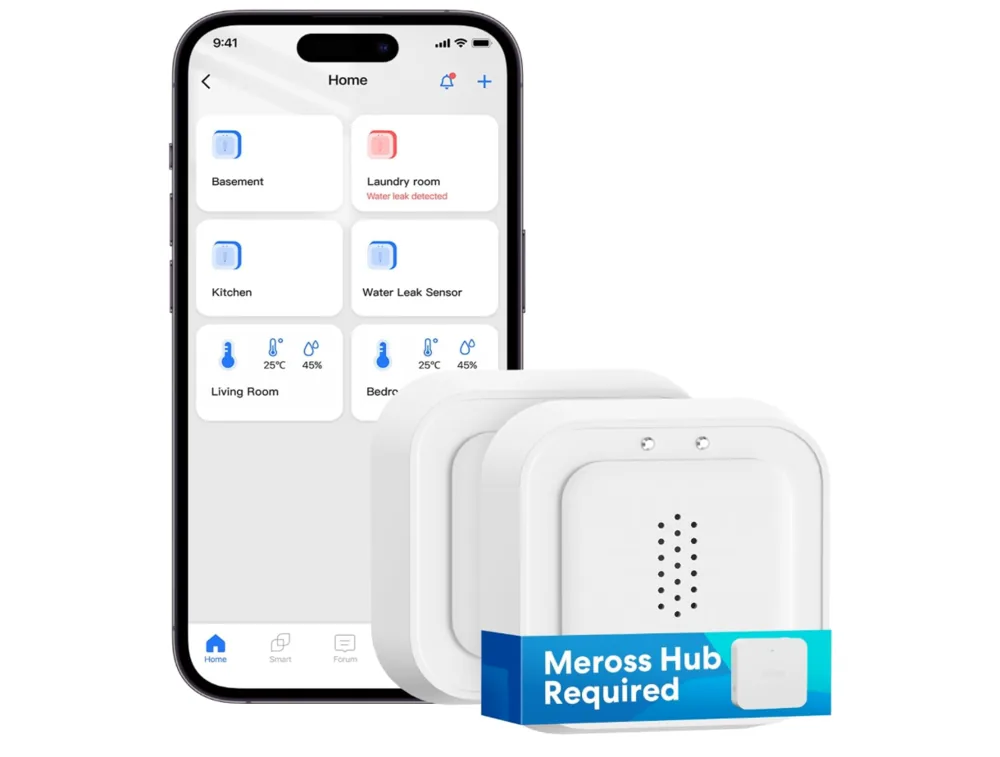
- Type: Connected sensor (hub required)
- Compat.: HomeKit / Alexa / Google
- Alert: App + local alarm
- Multi-room: Yes
✅ Strengths
- Remote smartphone notifications
- Local alarm + app
- Multi-room from one app
- HomeKit compatible
❌ Weaknesses
- −Meross hub required
For whom? Be alerted remotely, even at the office or on vacation.
4. X-Sense SWS54 (kit) — Complete home protection ⭐
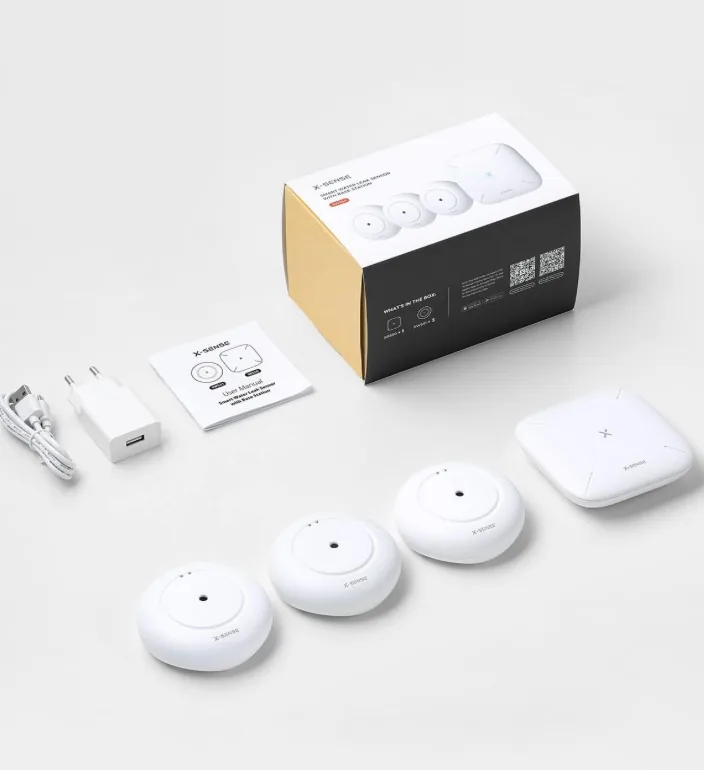
- Type: Station kit + sensors
- Connectivity: Long range RF + Wi-Fi
- Range: Passes through thick walls
- Scalable: Sensor expansion
✅ Strengths
- Full home coverage
- Base station + smartphone notifications
- Range that passes through thick walls
- Scalable system (add sensors)
❌ Weaknesses
- −Higher initial investment
For whom? Protect all home water points at once — true peace of mind.
5. Creechwa (shut-off valve) — To really shut off the water 🚨
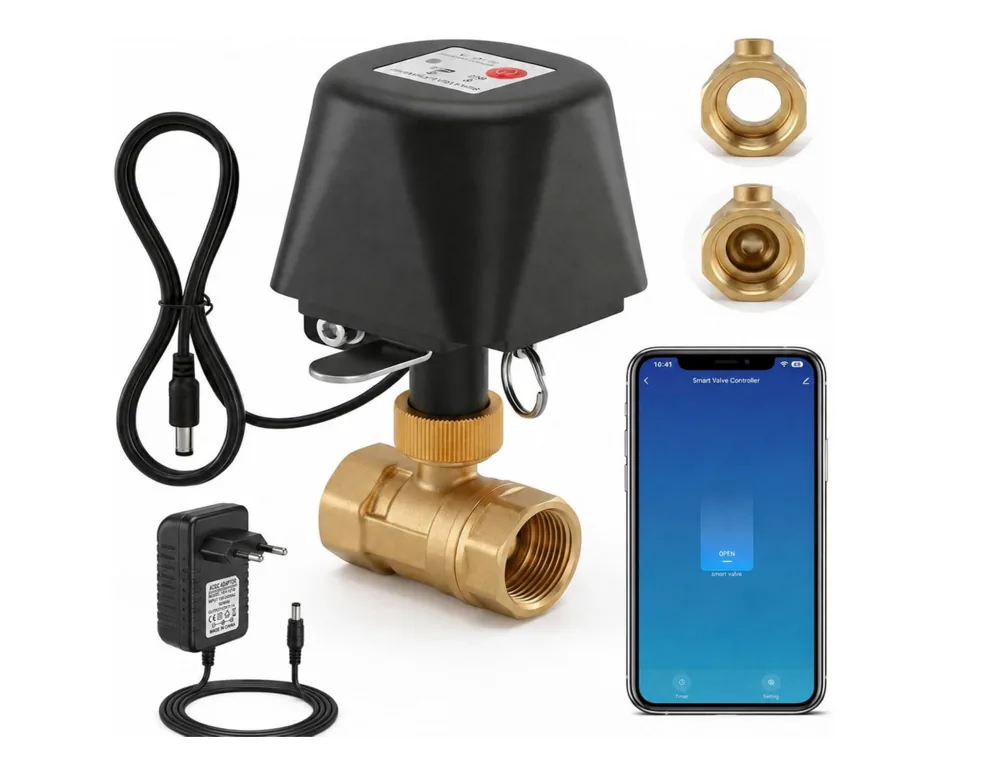
- Type: Motorized shut-off valve
- Control: App + Alexa / Google
- Function: Linkable to a detector
- Usage: Secondary residence
✅ Strengths
- Automatically shuts off water in case of leak
- Remote control via app
- Linkable to a detector
- Ideal for long absences
❌ Weaknesses
- −Installation on plumbing (plumber recommended)
For whom? Stop a leak even when absent — by pairing valve + detector.
👉 See the full comparison of water leak detectors
Alert or shut-off: the difference that matters
A detector warns you — but you still need to be reachable and reactive. If you are away, the water keeps flowing: a leak on a hose can flood a ground floor in a few hours. A valve paired with a sensor closes the supply automatically, without anyone having to intervene. The difference is measured in liters lost — and in thousands of euros of avoided damage.
Where to place your detectors?
A sensor at each critical point: under the washing machine and dishwasher, near the water heater, under the sink and washbasin, behind the WC, and in the cellar or basement. These are the places where leaks go unnoticed the longest.
Also an asset for insurance
Insurers look closely at these devices. While not promising a premium reduction, proving an alert and a quick shut-off can work in your favor in the management of a claim. A detector is also a stronger case the day it matters.
From leak to mold: acting fast
If water has already caused damage, don't stop at the detector: monitor the humidity level with a hygrometer, dry the affected areas with a dehumidifier, and ventilate with a VMC to prevent mold from returning.
Frequently Asked Questions
Is a water leak detector truly worth it?▾
Yes. For €15, it protects against a claim that costs on average €1,800. It is one of the best protection/price ratios for the home.
Which detector should I choose if I travel often?▾
A connected model that alerts remotely (Meross, X-Sense), or a motorized valve paired with a sensor, which shuts off the water on its own in your absence.
Can the water be shut off automatically in case of a leak?▾
Yes: a motorized valve on the main line, linked to a sensor via automation, closes the water as soon as detection occurs, even if you are absent.
Is a subscription required?▾
No for the models presented here. The application and notifications are free; some models only require a brand hub (Aqara, Meross).
Does a detector replace proper maintenance?▾
No, it complements it. Regularly check hoses and seals; the detector is the safety net for what you miss.
Summary: where to start
The best detector is the one you install today. To get started without breaking the bank, the Geevon set at €15 does the job. For complete protection, the X-Sense SWS54 kit covers the whole house. And to sleep peacefully even while traveling, pair a sensor with the Creechwa valve that shuts off the water all by itself. Acting now means avoiding an €1,800 claim — and the mold that comes with it.