📌 Summary
Absorber: small spaces (<20 m²), light humidity, no electricity, tight budget.
Dehumidifier: living areas, humidity >70%, fast results, precise regulation.
Detailed Comparison: Absorber vs Dehumidifier
| Criterion | Chemical absorber | Dehumidifier | Advantage |
|---|---|---|---|
| Extraction capacity | 100-500 ml/month | 10-30 L/day | 60x more |
| Coverage area | 5-20 m² | 20-80 m² | 4x more |
| Power consumption | 0 W | 200-500 W | - |
| Noise level | 0 dB (silent) | 35-50 dB | - |
| Purchase price | 5-15 € | 100-400 € | 20x cheaper |
| Annual operating cost | 60-120 € (refills) | 50-100 € (electricity) | Similar |
| Automatic regulation | No | Yes (hygrostat) | - |
| Lifespan | 1-3 months (refill) | 5-10 years | - |
Sources: UFC-Que Choisir 2024, ADEME, Énergie-Info
📊 Case Study: Cost over 5 years
Absorber (10m² closet)
- • Initial purchase: 12€
- • Refills: 8€/month × 60 = 480€
- • Electricity: 0€
- • 5-year total: 492€
Dehumidifier (40m² living room)
- • Initial purchase: 250€
- • Refills: 0€
- • Electricity: 85€/year × 5 = 425€
- • 5-year total: 675€
Analysis: The dehumidifier costs 37% more over 5 years but extracts 60x more moisture. For a humid living room, it is the most profitable choice in terms of result/cost.
The Moisture Absorber: For Small Spaces
The absorber uses calcium chloride crystals or silica gel which capture moisture through chemical reaction. Capacity: 100 to 500 ml per monthdepending on model and ambient humidity.
Advantages
- • Zero electrical consumption
- • Completely silent (0 dB)
- • Compact and discreet
- • Very low purchase price (5-15€)
- • Perfect for closets, caravans, cellars
Disadvantages
- • Very limited capacity (max 500 ml/month)
- • Expensive refills (60-120€/year)
- • Ineffective beyond 20 m²
- • No automatic regulation
- • Tray must be emptied regularly
The Electric Dehumidifier: Maximum Efficiency
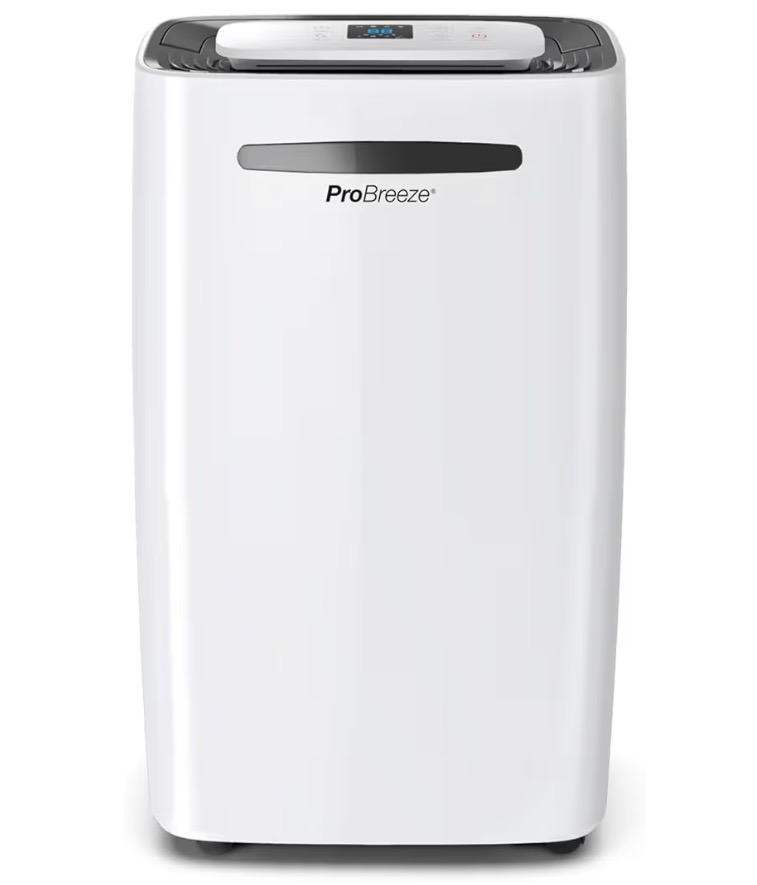
The electric dehumidifier sucks in air, cools it to condense water, then releases dry air. Capacity: 10 to 30 liters per day, which is 60 times more than a chemical absorber.
Advantages
- • 60x more effective than an absorber
- • Automatic regulation (hygrostat)
- • Covers 20-80 m² depending on model
- • No consumables to buy back
- • Measurable results in 24-48h
Disadvantages
- • Consumption: 200-500 W (~85€/year)
- • Noise: 35-50 dB (conversation)
- • Bulky (40-60 cm high)
- • Purchase price: 100-400€
- • Tank needs emptying (or continuous drainage)
Real electricity cost (ADEME 2024)
Guide to Choosing Based on Your Situation
Choose an ABSORBER if:
- • Small enclosed space (<20 m²): closet, cellar, caravan
- • Light to moderate humidity (55-70%)
- • No electric outlet available
- • Very limited budget (<20€)
- • Need for absolute silence
Choose a DEHUMIDIFIER if:
- • Living room or large area (>20 m²)
- • Significant humidity (>70%)
- • Need for fast and measurable results
- • Initial budget available (100-400€)
- • Health issues related to humidity
Sources and references
This article relies on official, verified sources to guarantee reliable information.
- [1]Practical ventilation guide— ADEME
- [2]Dehumidifier test 2024— UFC-Que Choisir
- [3]Indoor air quality— OQAI
- [4]Household appliance consumption— Énergie-Info
Thomas Mercier
Verified expertAir quality expert
14 years of experience in thermal engineering and air quality